
Charlottesville Current Owner Record
Charlottesville's assessment data is broader than a simple name field. The City Assessor describes computerized parcel information. That data covers ownership and deed and plat references. It also includes ownership history and improvement details. Treat the card you see as a starting point rather than a fixed form. Field labels can shift between views. Labels for the current owner, mailing address, situs, or last sale may change. For a dated, year-specific reference, the land book is cleaner. The city's annual land book shows who the tax roll carried for that cycle.
| Ownership | Maintained by the Assessor; exact live label is not confirmed. |
|---|---|
| Mailing information | Owner and mailing information are maintained; exact label is not confirmed. |
| Physical address | A confirmed parcel identifier, though current display label is not confirmed. |
| Deed and plat references | Maintained for navigation to recorded instruments. |
| Ownership history | Maintained in parcel information; exact date range is not published. |
| Assessment year | Use the land-book year to date an annual roll entry. |
An owner of record is not always an occupant. The parcel may vest in a trustee or a company. The mailing address on the assessment card can differ from the physical address. It can differ from the address of the property itself. Read the deed's vesting language and the parcel ID. Together they show who is actually named on the record. Guessing from a nearby address or a person seen at the house is the wrong path.
Verify Charlottesville's Current Owner
Confirming a recent transfer takes two offices. Start with the Assessor's owner information. Then compare it against the newest deed recorded by the Circuit Court Clerk. SRA supplies remote access to land records. Its public landing page leaves the online cutoff, result fields, and image terms unstated. When an image is not available online, the clerk counter remains the documented route to an official instrument.
- Search the physical address or nine-digit parcel ID in the City Real Estate Records and GIS Viewer.
- Read the owner, deed, and plat references maintained by the Assessor; note the parcel ID and legal description.
- Search the named grantee in Virginia SRA or call the Circuit Court Clerk to confirm the latest recorded deed.
- If the deed names a business or estate, check the relevant SCC entity or clerk probate record for context.
- Owner of record
- The party named in the assessment or recorded deed.
- Vesting
- The form in which the deed says the interest is held.
- Registered agent
- A business filing contact, not automatically the property's owner.
Charlottesville Owner Record Limits
Treat the current owner name and mailing details as property-record context only. Public land records identify the parties to a transaction. They do not prove who lives in a home. Nor do they create any right to track a person. Virginia's Address Confidentiality Program shields identifying information for eligible participants. Certain address details are also exempt from release.
Lawful use. A current-owner record can support a parcel question, purchase diligence, or tax matter. Do not use it to stalk, harass, threaten, or harm another person.
Charlottesville Roll Timing
No fixed lag exists between a deed recording and an assessment-roll update. A fresh transfer can show up in the Circuit Court Clerk's land-record index while the Assessor still lists the prior owner. Check the record dates first. The difference may simply be timing rather than an error.
After a recent sale, search the newest grantee in SRA and read the deed's recording information and vesting language. If the roll lags behind, call the Assessor with the owner, physical address, and parcel ID in hand. The recorded deed confirms the conveyance itself. The assessment card is only the tax-roll view.
Dates matter as much as names. A deed records a transaction when accepted for recording. An assessment record is maintained for a tax cycle. A land-book PDF is an annual snapshot. When those dates straddle a sale, inheritance, parcel split, or entity change, the same street address can carry different parties in different sources without anything being wrong. Save the source and date beside every name you record.
Charlottesville Assessor Identifiers
When a current-owner result seems off, offer more than one matching clue. Charlottesville's assessor routes inquiries by owner name, physical address, or the nine-digit parcel ID. It keeps hard-copy parcel history and a public computer. The office serves visitors by appointment at 102 5th Street NE. It answers at 434-970-3136.
Keep the legal description beside the parcel number when two properties share similar addresses. One person can hold more than one parcel. A condominium building may contain several separate tax lots.
Those three identifiers cover most lookups. Giving more than one helps with multi-unit buildings or parcels near the Albemarle County boundary. Charlottesville is an independent jurisdiction. A familiar postal city name does not decide which assessor or clerk holds the record. The official office page describes the ownership, deed references, and parcel history the city maintains.
Charlottesville Annual Owner Snapshot
The yearly land book adds a second timestamp to the ownership question. Charlottesville posts unofficial taxable and exempt PDFs covering 2015 through 2026. Each year lists the owner, legal description, parcel ID, assessed value, and levied tax. Work one tax year at a time. That habit keeps an older entry from being mistaken for the latest conveyance.
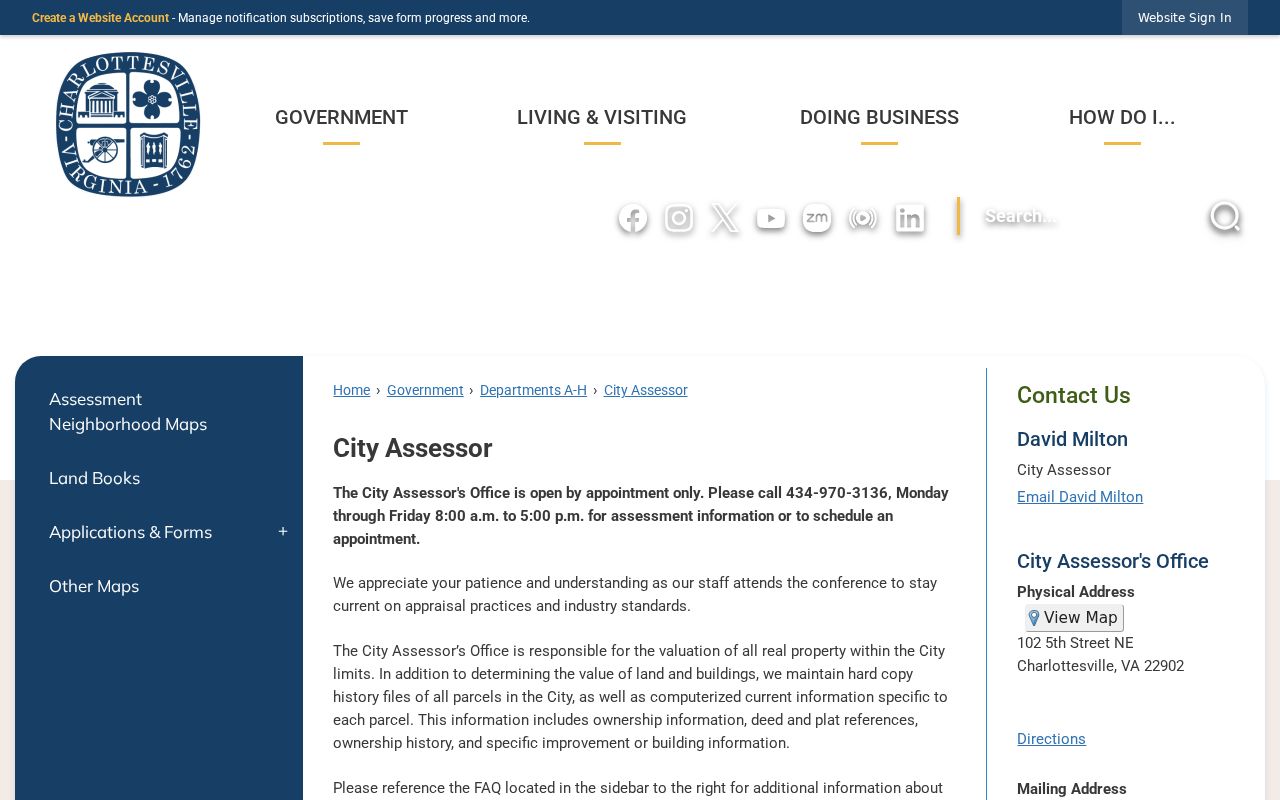
The City Assessor page identifies the ownership kept in parcel data. It also covers deed and plat references, history, and building details.
Compare current parcel information against the proper land-book year. Then lean on the clerk's deed for any new transfer.
For an in-person review, the Assessor sits at 102 th Street NE. The office serves the public Monday through Friday, 8 a.m. to 5 p.m. Appointments are requested. The office offers a public computer for parcel research. Staff keep hard-copy parcel histories, a useful fallback when an older ownership question is not represented clearly on the current card.
Use the city's land-book collection to pick the year. Then confirm whether the copy is unofficial.
Charlottesville Names in Deeds
Title can rest with a trust, company, or estate. Search the exact grantee language in the deed and compare it against the assessor's owner information. An LLC or corporation needs business context. The Virginia SCC's Clerk's Information System supplies that filing detail. A registered agent is a service contact, though, not proof of individual ownership.
Probate can explain a deceased owner's deed. If the name leads to an executor, administrator, or commissioner conveyance, wills and fiduciary books sit with the clerk and the Library of Virginia. Ask the clerk directly about search controls and fees. The named grantee and the person who controls or benefits from an entity can be different.
Company filings explain legal structure. They will not convert a registered agent into the owner of record, and they rarely disclose private ownership agreements. Keep the deed's exact vesting clause handy. Save its recording reference as well. When a role is unclear, ask the clerk about the instrument itself.
Charlottesville Clerk Fallback
The Circuit Court Clerk at 315 East High Street takes land-record questions by phone. Call 434-970-3766 on weekdays. Hours run 8:30 a.m. to 4:30 p.m. The public SRA page states neither Charlottesville's current index cutoff nor its copy prices. Call before requesting a certified deed, using a subscription image service, or traveling to search older books.
Deed indexes reach back to 1888. Older Charlottesville indexes appear in the Library of Virginia's local-records catalog. When online records stop, try the catalog. That is not proof a transfer never happened. The Charlottesville deed-records page explains how to follow the recorded instrument chain.
Give the clerk a clear starting point. Name the grantor and grantee if known, a rough recording period, the parcel address, and any book, page, or instrument reference from the Assessor. The public SRA index may locate a record. The clerk still controls image access and certified-copy service. Charlottesville's subscription terms and copying charges are unstated, so confirm them with the office before ordering.