
Charlottesville Tax Record Fields
Every tax record in the city has two sides. The Assessor values real estate. The Treasurer bills and collects. Between them sits Charlottesville's yearly land book, which records the assessed value and the levied tax together with the owner, legal description, and parcel number.
| Field | What It Shows | Where |
|---|---|---|
| Assessed value | Fair-market estimate as of January 1, based on prior-year sales. | City Assessor and annual land book |
| Owner, legal description, parcel ID | Identifies the taxable property for that year. | Annual land book |
| Levied tax | Tax amount recorded for the parcel in the yearly book. | Annual land book |
| Bill and payment | Installments, payment options, and collection rules. | City Treasurer |
| Tax relief applications | Programs and eligibility forms managed through city contacts. | Commissioner of Revenue and city forms |
An assessed value is the city's estimate for the annual tax roll. A sale price comes from a deed for one transaction. The two can differ in date, terms, or amount. The tax bill is computed from the city's rate and the assessed value. It is not an independent estimate of what a property would sell for.
The land book helps most when a question mixes value with payment. Its assessed-value and levied-tax fields describe the annual roll. The Treasurer's account shows collection activity and current installments. A recorded deed documents a transfer. An assessment appeal addresses valuation. Those records serve different purposes even for the same parcel and tax year.
Find a Charlottesville Tax Bill
The city's tax page publishes the real-estate tax rate, due dates, payment options, late charges, and collection contacts. The city publishes no searchable tax-account tool. Use the payment link when available, and ask the Treasurer for a parcel-specific balance rather than assuming a public search offers an address or parcel filter.
Gather a few identifiers before calling. The parcel ID, property address, owner name, and bill year from the assessment record all help staff separate similarly addressed units and prior owners. Checking on a payment already sent? Keep the payment date and confirmation details ready. A current land-book levy does not show whether an installment has been paid or posted.
- Identify the parcel through the City Assessor or a yearly land-book entry.
- Use the Treasurer's real-estate tax page and its payment link for the current bill route.
- Call the Treasurer at 434-970-3146 if the account, amount, or payment arrangement needs review.
- Check collection or judicial-sale details with the city before treating a third-party notice as current.
- Assessed value
- The City Assessor's annual estimate of fair-market value as of January 1.
- Levy
- The tax amount charged to the parcel for the year.
- Tax installment
- One of two equal payments due during the city's annual cycle.
- Tax lien
- A recorded or collection claim tied to unpaid tax; confirm its status with the custodian.
Appeal a Charlottesville Assessment
Charlottesville's 2026 appeal application required a separate filing for each parcel, owner or authorized-agent status, supporting evidence, and a filing deadline of March 4, 2026. That date has passed. The form tied the assessment to fair-market value as of January 1, 2026. Check the city's current forms before relying on the past-cycle date for a future appeal.
Appeal window. The 2026 application deadline was March 4, 2026, so use the city's forms page for the next cycle and confirm the correct review route with the Assessor.
Charlottesville January Value Date
The City Assessor sets fair-market value each January 1. The model draws on sales from the prior calendar year. That date governs the tax roll, not any later sale. It does not promise a buyer will pay the assessed amount. The 2026 appeal application listed land, building, and total lines separately. It showed a parcel can be valued piece by piece rather than as one lump figure.
Match the parcel's assessed amount against its land-book year. Also match the assessment notice from that same cycle. A year-to-year change may signal a new assessment, a parcel edit, or a data correction. It does not mean the tax bill climbed by the same percentage. The bill also depends on the city's rate. Renovations and market shifts after January 1 do not automatically move that cycle's value.
An appeal works best with evidence tied to the valuation date. Gather comparable sales and parcel-specific facts that applied around January 1. Focus on differences in land area, building condition, and parcel configuration. Additions matter too. Comparing headline prices alone tells the assessor very little.
Charlottesville Land Book Years
Charlottesville publishes unofficial taxable and exempt land-book PDFs covering 2015 through 2026. Each yearly entry lists the owner, legal description, parcel number, assessed value, and levied tax. These files preserve a dated view of a parcel. That makes them useful when an active GIS map card has since changed. For an official book, ask the Circuit Court Clerk. The Assessor can help separate an annual roll entry from a deed or a payment record. The clerk can help with that too. Open the city's annual land-book collection to choose a taxable or exempt PDF.
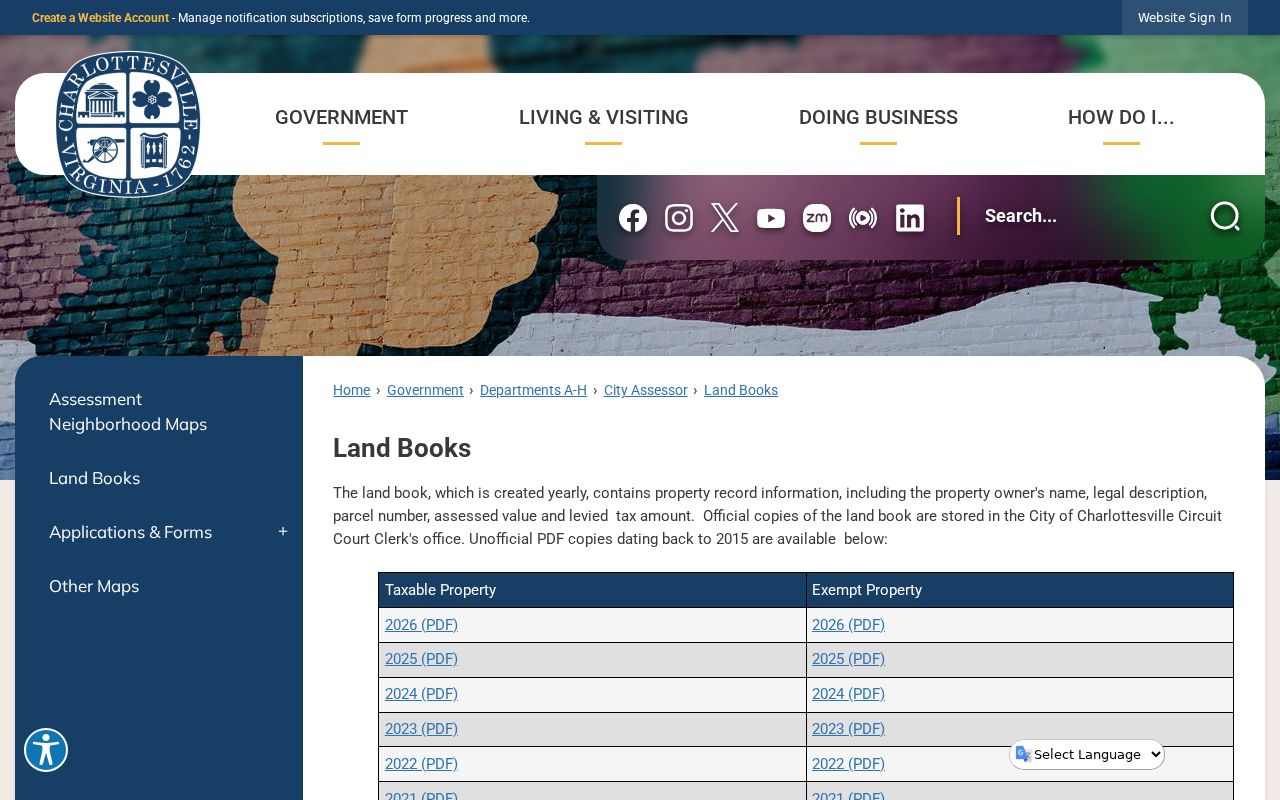
The yearly file fixes one assessment in time, while the official copy stays with the clerk.
Charlottesville Tax Installments
Charlottesville sets its real-estate tax at $0.99 per $100 of assessed value. The city bills in two equal installments. They fall due June 5 and December 5. When a deadline lands on a weekend, payment moves to the following Monday. A bank card carries a third-party convenience fee. ACH and electronic check payments carry none.
For illustration, a fully taxable assessment of $100,000 would owe $990 in annual city real-estate tax before relief, adjustments, or account-specific charges. Each installment would be $495. That math is only a starting point. Exemptions and account activity can push a parcel's balance away from a rate calculation, so rely on the Treasurer's posted bill for the actual amount.
The Treasurer's tax page is the official source for payment routes and current instructions. The city publishes no account-search field list. Call 434-970-3146 when a parcel's balance or payment status is unclear. The official page also lists real-estate tax dates and payment choices.
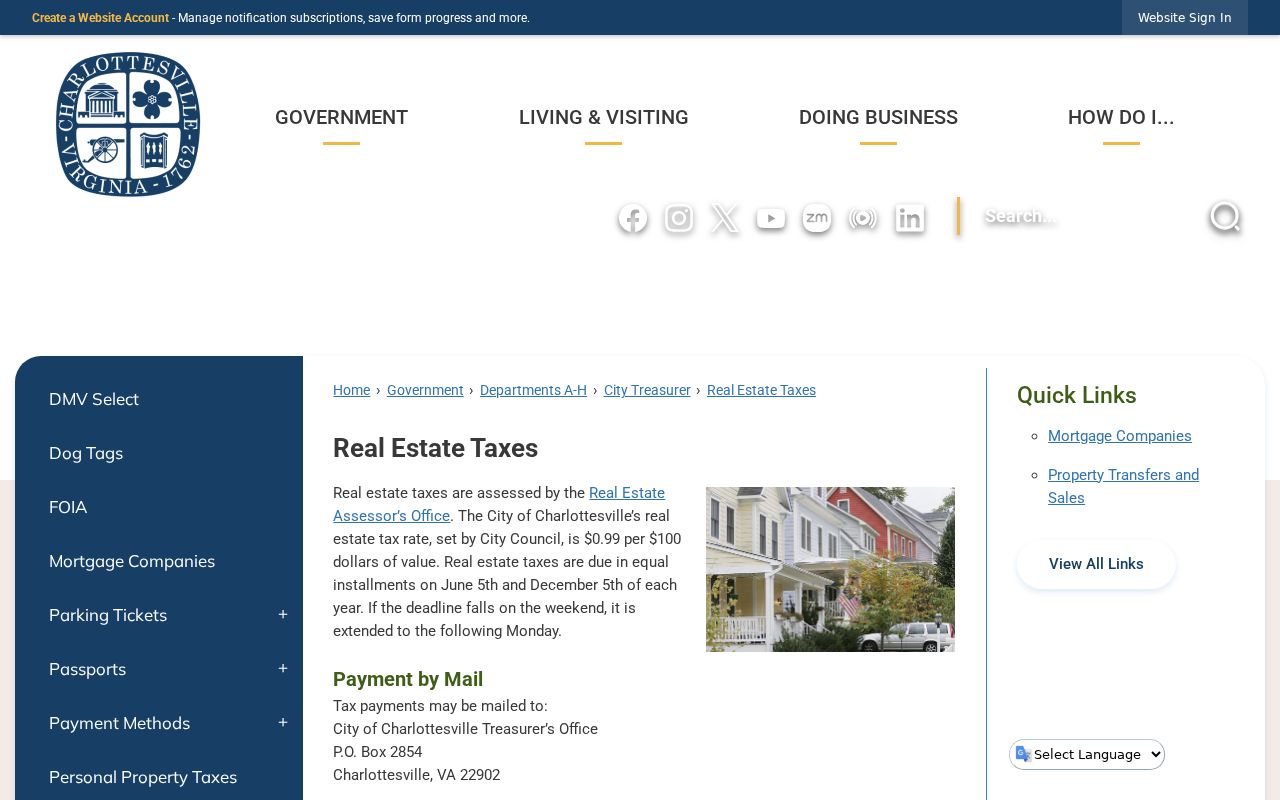
Confirm the account with the Treasurer first. Pay nothing through a notice or third-party site until the amount matches the city's own records.
Late Charlottesville Tax Balances
Miss a due date. A 10 percent penalty lands on the account the day after the deadline. Interest follows. It runs at 10 percent a year, starting the first day of the next month. The Treasurer will discuss payment arrangements. Those talks do not stop the penalty or interest from accruing. Cards still carry the convenience fee. ACH and electronic check remain free under the city's published instructions.
Ask the Treasurer what the account currently owes. Contact the office early if full payment is not possible, and request the current balance. A plan freezes nothing. The posted penalty and monthly interest rules keep applying.
Charlottesville lists bank-account liens, rent liens, and wage garnishments among its collection tools. Judicial sale looms after three or more years of unpaid tax. The city points to a third-party site for upcoming sale notices. Treat any notice as a lead. Verify the parcel, court status, redemption issue, and sale date with the Treasurer or Circuit Court Clerk.
Charlottesville Tax Relief Forms
The Commissioner of Revenue administers the city's tax-relief and exemption applications. Application-specific forms are published for these programs, and a veteran-form contact is available at 434-970-3160, though the city does not publish a complete program list with eligibility terms in one place. Eligibility turns on the city's own forms rather than on a name, age rule, income cap, or benefit borrowed from another Virginia locality.
Questions can go to the Commissioner or the City Assessor. Keep the form, parcel reference, and assessment year together so staff can tell whether an issue concerns value, relief, or a payment balance.
Tax relief and an assessment appeal do not share one deadline or filing route. Relief is an application under a city-administered program; an appeal challenges the value assigned to a parcel. The 2026 appeal form asked applicants to identify themselves as owner or authorized agent and to submit supporting evidence for the land, building, and total values. The next cycle's instructions carry the current dates and documentation rules. The city maintains its assessor and assessment forms online.
Charlottesville Appeal Evidence
The 2026 appeal form covers one parcel at a time. It asks for the property, the owner or authorized agent, and the land, building, and total values under review. It asks for the property and the owner or authorized agent. It also wants the land, building, and total values under review. Supporting evidence is required too. Attach the assessment notice and the relevant parcel record. The parcel record helps the city identify the claim. Read that cycle's form for evidence and filing details.
A 2025 sample notice is a past-cycle example only. It listed an Assessor-review deadline of February 28. It also listed a 30-day Board of Equalization appeal after a formal decision, and May meeting dates. Those dates no longer apply. The Charlottesville property-value page explains how assessment figures differ from sale prices and bills.