
Find a Charlottesville Property Owner
Work from the address to the parcel and then to the newest deed. The City Assessor keeps ownership data, deed and plat references, ownership history, and improvement details, and accepts an owner name, a street address, or a nine-digit parcel ID as identifiers.
Each source has its own job. The GIS viewer pinpoints the parcel. The land book gives a dated annual roll snapshot. The Circuit Court Clerk records deeds and plats. A new assessment can trail a freshly recorded deed because Charlottesville publishes no fixed update delay.
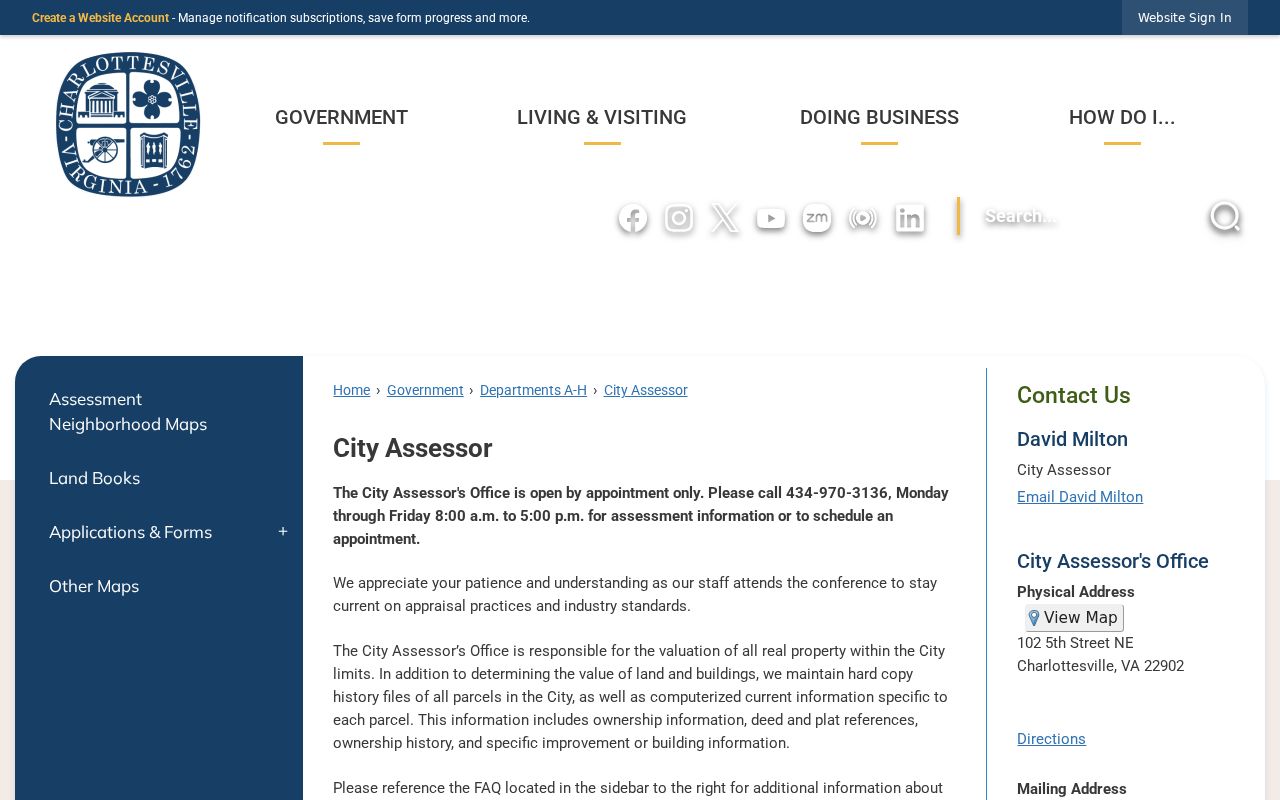
The City Assessor sits at 102 5th Street NE, P.O. Box 911, and answers at 434-970-3136. Hours are weekdays, 8 a.m. to 5 p.m., appointments preferred. A public computer there supports parcel research. Call when one address covers multiple lots or a deed reference on the card seems unclear.
- Use the physical address or parcel ID in the Charlottesville Real Estate Records and GIS Viewer to identify the parcel.
- Read the owner information maintained by the Assessor, then note the deed and plat references and ownership history.
- Search the named grantee in Virginia SRA or ask the Circuit Court Clerk to confirm the latest recorded deed.
- If the grantee is an LLC, check its filing in the Virginia SCC's Clerk's Information System; a registered agent is not automatically an owner.
Charlottesville Owner Record Sources
Charlottesville splits ownership data between two places. The assessment roll offers a stable, dated view of each parcel, while the clerk's deed index confirms who actually conveyed and received title. When the grantee on a deed is a company, the SCC can add useful context. Remember that no single public result proves a recent change has reached every city system yet.
| Source | Owner Info It Gives | Access |
|---|---|---|
| City Assessor | Ownership information, parcel history, deed and plat references. | GIS Viewer, public computer, or appointment. |
| Annual land book | Owner, legal description, parcel ID, value, and levy for a year. | Unofficial PDFs from 2015 to 2026; official book at clerk. |
| Circuit Court Clerk | Grantor and grantee named in a recorded conveyance. | Virginia SRA index, image access by clerk, or courthouse. |
| Virginia SCC CIS | Public business-entity details for a company named in a deed. | Statewide entity system; exact live fields not captured. |
An owner of record is not always the occupant. A parcel can sit in an entity or estate name, and its mailing address may lie far from the situs. Public property records serve well for diligence, but the recorded deed is what confirms legal ownership.
Charlottesville Ownership Limits
A Charlottesville owner lookup names the party in a parcel record or deed. It cannot reveal who lives inside or guarantee clear title. Virginia's Address Confidentiality Program shields eligible victims behind a substitute mailing address. Participant-identifying information is exempt from FOIA. Handle every public address with care. Never try to work around a protected-address program.
Lawful use. Use Charlottesville owner records for property diligence, house history, and civic research. Do not use owner information to stalk, harass, threaten, or harm a person.
Charlottesville Ownership Terms
Names and addresses mean different things in an ownership record. The person named in the assessor roll may not live at the site, and a deed party can be a trust or a business. Carry the legal names from the record into whatever source you check next.
- Owner of record
- The party named in the assessment record or recorded conveyance.
- Grantee
- The person or entity receiving an interest in a deed.
- Vesting
- The way the deed says an interest is held, such as by an entity or trustee.
- Situs address
- The property's physical location, which can differ from the mailing address.
Charlottesville Mailing and Situs
The Assessor asks searchers for a physical address and maintains both owner and mailing information. The situs is the parcel itself. The mailing address is simply where notices go. It can sit outside Charlottesville entirely, so never mistake it for the property's location. When a search keys on a mailing address, circle back to the parcel ID. Check the legal description before claiming an owner match. Charlottesville's nine-digit parcel number is the best confirmed key across city record systems.
Charlottesville Annual Owner Snapshot
The annual land book gives a dated snapshot of owner and parcel details for each tax year. Charlottesville posts unofficial taxable and exempt PDFs covering 2015 through 2026. Each listing includes the owner, legal description, parcel number, assessed value, and levied tax. The official books live with the Circuit Court Clerk. That matters when an online copy is not enough.
The city's land-book collection helps when an owner name changes or a current card looks off. It never replaces the newest recorded deed, though. The City Assessor explains the ownership history and deed references kept for Charlottesville parcels.
Use the annual entry to weigh one tax year against the current assessment record. Then confirm title through the clerk. Owner data is an administrative record kept for assessment and tax purposes. The Assessor's parcel cards carry deed and plat references plus ownership history. But the city publishes no cutoff date for updates to the current card. If a transfer is recent, ask whether the card reflects the instrument yet. Compare the clerk's recording information directly.
Charlottesville Recent Transfer Timing
Charlottesville sets no fixed lag between a recorded deed and the next assessor update. That gap matters. A fresh sale hits the Circuit Court Clerk's index fast. The parcel roll still lists the prior owner of record. Timing, not error, is usually the cause.
For a recent conveyance, search the grantee name through the statewide SRA land-record portal. Then compare the recorded instrument against the date on the land-book or assessment entry. The portal notes that image access depends on the local clerk. When names still differ, call the Assessor. Have the physical address and parcel number in hand. A mismatch can point to vesting wording or a different parcel entirely. The deed itself remains the document that verifies the conveyance.
Charlottesville Entity and Estate Names
An ownership result in Charlottesville may not name a person at all. Companies, trustees, executors, administrators, and estates all appear as owners of record. Search the grantee wording exactly as the deed states it. Guessing at an individual's name behind the entity invites errors.
An LLC or corporation may hold title. The Clerk's Information System maintained by the Virginia SCC supplies business-entity context. Treat the registered agent as a service contact only. That agent is not automatically the land's owner. The clerk and the Library of Virginia also hold wills and fiduciary material. That material can explain an estate transfer. Ask the clerk about current probate access, since index fields and copy fees vary.
Entity filings help you read a deed grantee. They never replace the recorded conveyance itself.
For an LLC or corporation, lay the state entity record beside the legal name on the deed. Keep the roles distinct. A registered agent handles service, while the deed names the legal grantee. A trustee or personal representative may sign in a fiduciary capacity. So check the capacity stated in the instrument before crediting an individual with ownership. Where names repeat, the name alone is weak evidence. The parcel's legal description and recording reference give stronger matching.
Virginia Protected Addresses
Virginia's Address Confidentiality Program gives an eligible victim a substitute address plus mail forwarding. The law exempts records identifying participants from FOIA. It allows only narrow exceptions for court orders or a bona fide statutory need. A public property trail should never be used to guess a protected person's actual location.
An ownership record serves property context, due diligence, and house history. It is not permission to contact someone in a way that invades privacy. Nor does it permit contact that puts them at risk.
Chasing a beneficial owner behind a legal entity? The parcel roll may not answer that. Business filings show formation details and registered agents, while the deed identifies the legal grantee. Private agreements among members, owners, or trust beneficiaries stay private. Interpret only what the recorded source actually says.
The annual land books run by tax year. That is not the day a buyer or heir took title. Charlottesville's 2015-2026 PDFs trace when the assessed owner name changed. But the deed recorded by the Circuit Court Clerk remains the official transfer evidence. Cite both the tax year and the instrument date when explaining a change in the public record.
The program is set out in Virginia Code section 2.2-515.2.